Hidden Closure Construction Explained
Specifying a hidden closure starts with language: a designer writes invisible zipper when the requirement is a finished seam that vanishes into the garment, while a factory engineer writes concealed zipper when the tape structure and coil mounting have to be controlled in the tech pack. This page decodes both readings of the same product — reverse coil teeth, concealed tape, precision stoppers, slider and puller interfaces, end-type choices, Pantone matching and the RFQ fields that decide a production run.
Terminology
“Invisible” and “Concealed” Are Two Languages for One Closure
The same zipper gets two different names depending on which side of the tech pack you sit on. Aligning the vocabulary before writing a specification prevents the most common sourcing mismatch: an aesthetic brief answered with a mechanism quote, or a structural question answered with a colour card.
“Invisible zipper” — the buying term for the finished effect
Used when the requirement is the result: a closure that disappears into a seam so the garment reads as one continuous surface. This is the word that appears on a design brief, a lookbook reference or a retail specification for dresses, skirts, cardigans and jackets where a visible zip would break the line. Success is judged by how the seam looks once the garment is pressed and worn.
“Concealed zipper” — the engineering term for the mechanism
Used when the requirement is the construction: the concealed tape structure, coil orientation and stopper geometry that let the closure sit inside the seam allowance. This is the word that appears on a bill of materials, a line sheet or a review document, because it describes what actually has to be sewn, tested and repeated at volume. Success is judged by tape behaviour on automated or manual sewing lines.
Buyer decision: if your document describes appearance, you are specifying an invisible zipper; if it describes tape, mounting and end type, you are procuring a concealed zipper. Either way the vocabulary tells ZEELINK which questions to ask first.
Construction anatomy
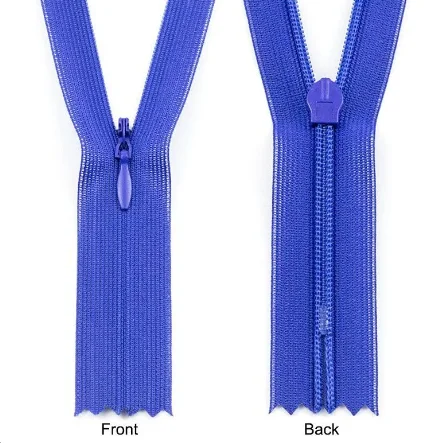
Reverse Coil Teeth and Concealed Tape: Why the Closure Disappears
A hidden zip does not disappear because fabric is draped over it. It disappears because the tape is built to fold into the seam, and because four interfaces agree with each other.
- Reverse coil teeth. The coil side is the side that sits against the fabric edge, so the teeth close inward and the seam passes over them. This reverse coil arrangement is what produces the disappearing effect the family is bought for.
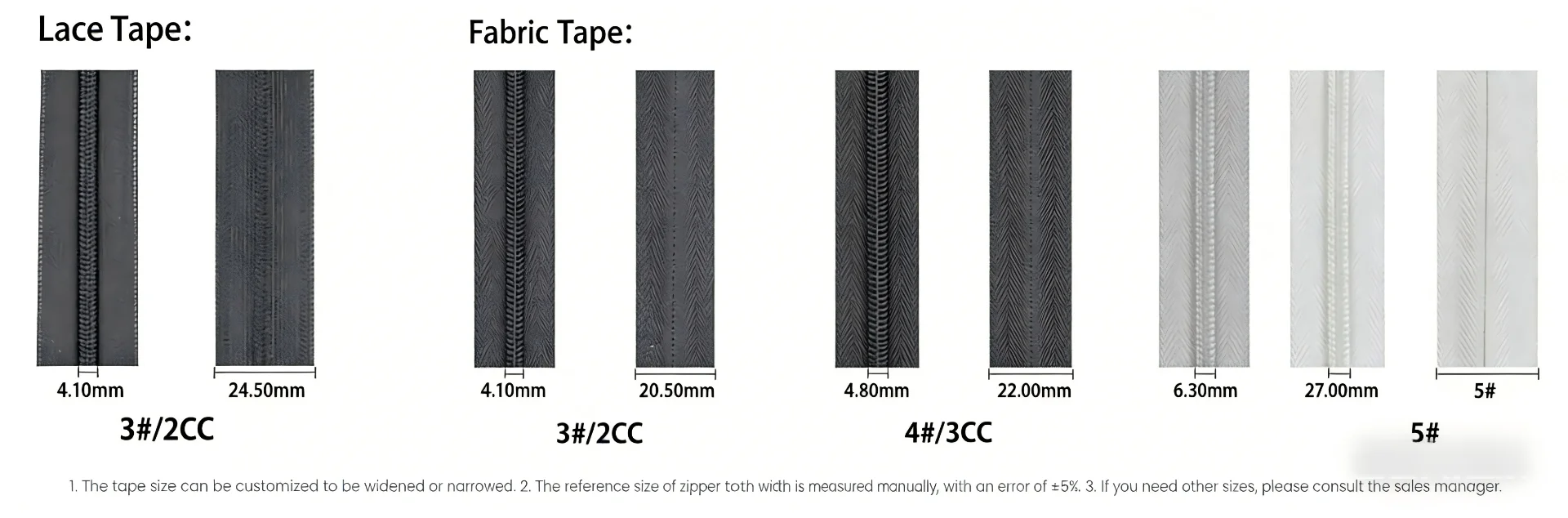
- Concealed tape structure. The tape provides a clean finish when sewn into garments and is designed for ease of integration with automated or manual sewing lines.
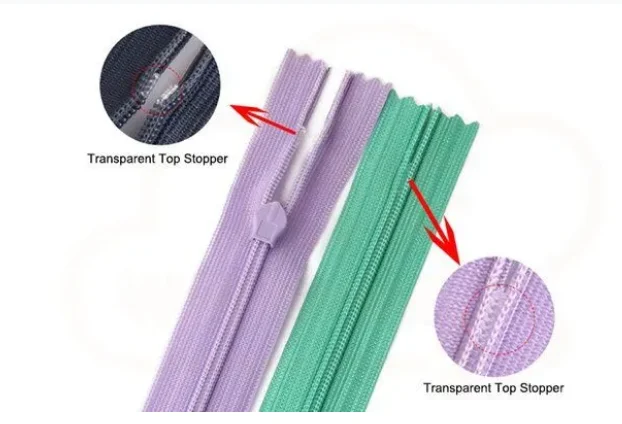
- Precision-engineered stoppers. Stoppers ensure reliable zipper operation and longevity and are available in various colours and finishes to match fabric requirements. Each stopper undergoes rigorous quality testing to guarantee consistent performance.
- Slider and puller interface. Advanced design logic incorporates precision-engineered stoppers and tailor-made pullers to enhance structural integrity and system compatibility. The puller is the one component a wearer actually touches, which makes it the natural place to carry brand identity.
Buyer decision: when a sample fails at the seam line, the cause is usually the tape interface; when it fails at the top or bottom of the opening, check the stopper specification before changing the coil.
Spec matrix
What to Confirm Before You Send an RFQ
The table separates what ZEELINK documents on the product page from what has to be fixed in writing for your order. Fields marked confirm in RFQ are deliberately left to your specification rather than assumed.
| Attribute | ZEELINK documented option | RFQ field |
|---|---|---|
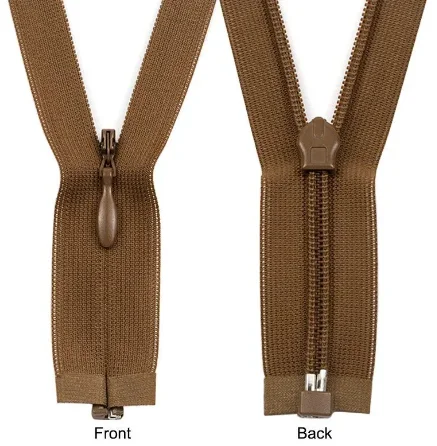
| Style / end type | Closed-End (listed as a common style) and Open-End (separating) constructions. | Which end type applies to each SKU and garment. |
| Tape structure | Concealed tape structure that delivers a clean finish and integrates with automated or manual sewing lines. | Tape colour, and tape width confirmed against your seam allowance. |
| Stopper | Precision-engineered stoppers in various colours and finishes, each quality tested for consistent performance. | Stopper colour and finish per colourway. |
| Slider & puller | Tailor-made pullers, including unique shapes, premium finishes and brand logo integration. | Puller style, finish and branding method. |
| Size | A size specification section applies to this range. | Target size — confirm in RFQ. |
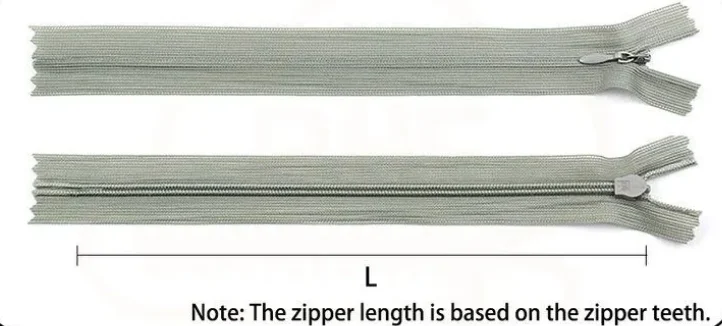
| Length | Zipper length is based on the zipper teeth. | Finished length measured on the teeth — confirm in RFQ. |
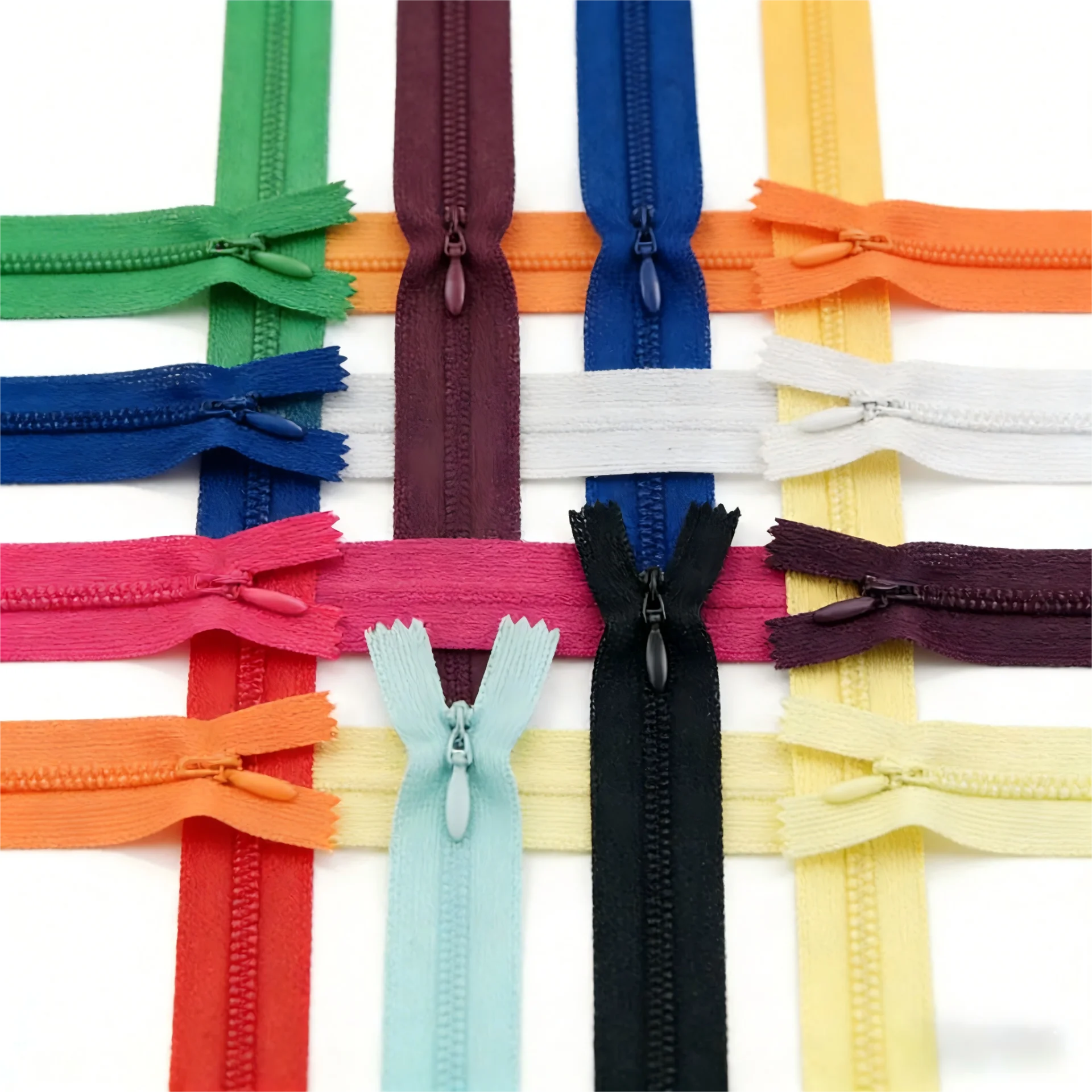
| Colour | Standard colour range, Pantone colour matching, and custom colour development against minimum order quantities. | Pantone reference, and whether colour fastness testing is required. |
| Operation | Quiet, smooth operation with minimised snagging risk. | Expected slider feel and noise level for the end use. |
| Durability | Durability under frequent laundering and wear, assured through material selection and testing protocols. | Laundering and wear test protocol for your programme. |
Customisation
Pantone Matching and Custom Puller Branding
Customisation is where a concealed closure stops being a component and becomes part of the product identity. Two touchpoints matter most: the colour of the tape, and the puller your customer touches.
Colour development on the tape
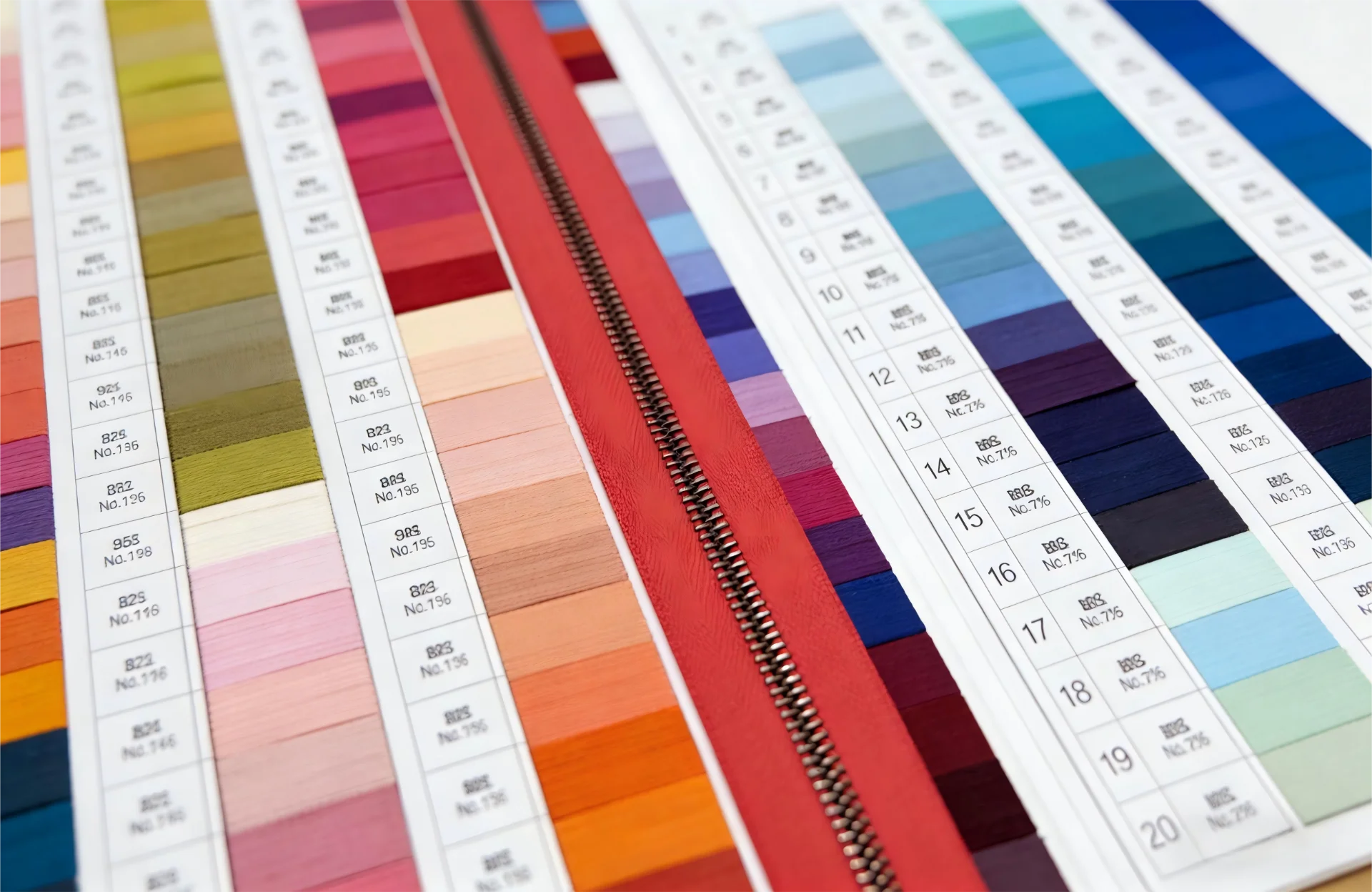
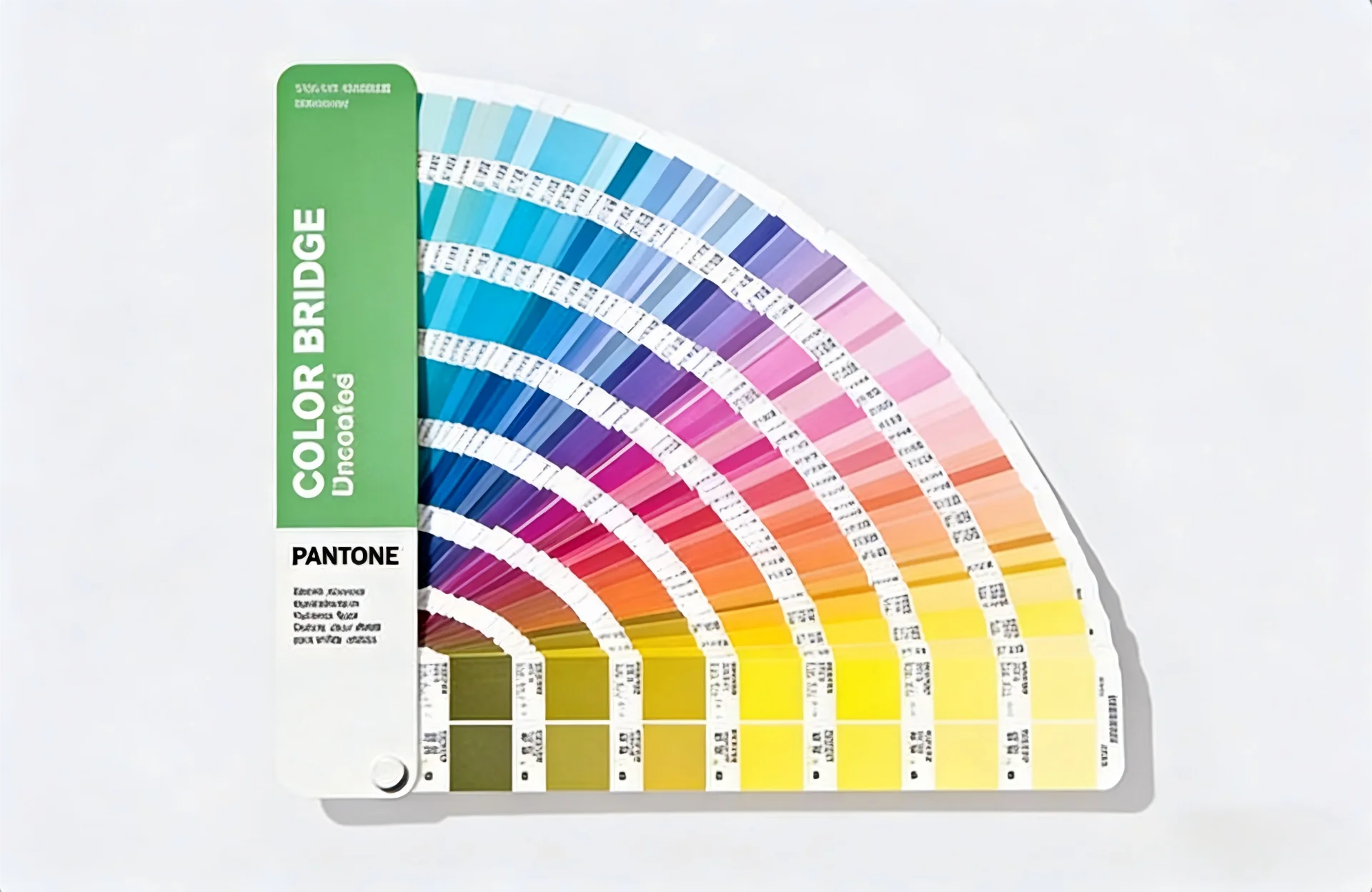
Pantone colour matching is available against the reference you supply, so the closure reads as the same material as the garment rather than a visible accessory. Where no standard shade works, custom colour development is offered against minimum order quantities, with a custom colour lead time of 15–20 business days. Colour fastness testing can be arranged upon request for programmes that require documented stability.
Custom pullers and hardware branding
Custom invisible zipper pullers are produced in unique shapes and premium finishes with brand logo integration, using advanced die-casting and precision machining. Prototype development and sampling run before tooling, and custom tooling and mold design services support exclusive designs that a competitor cannot buy off the shelf.
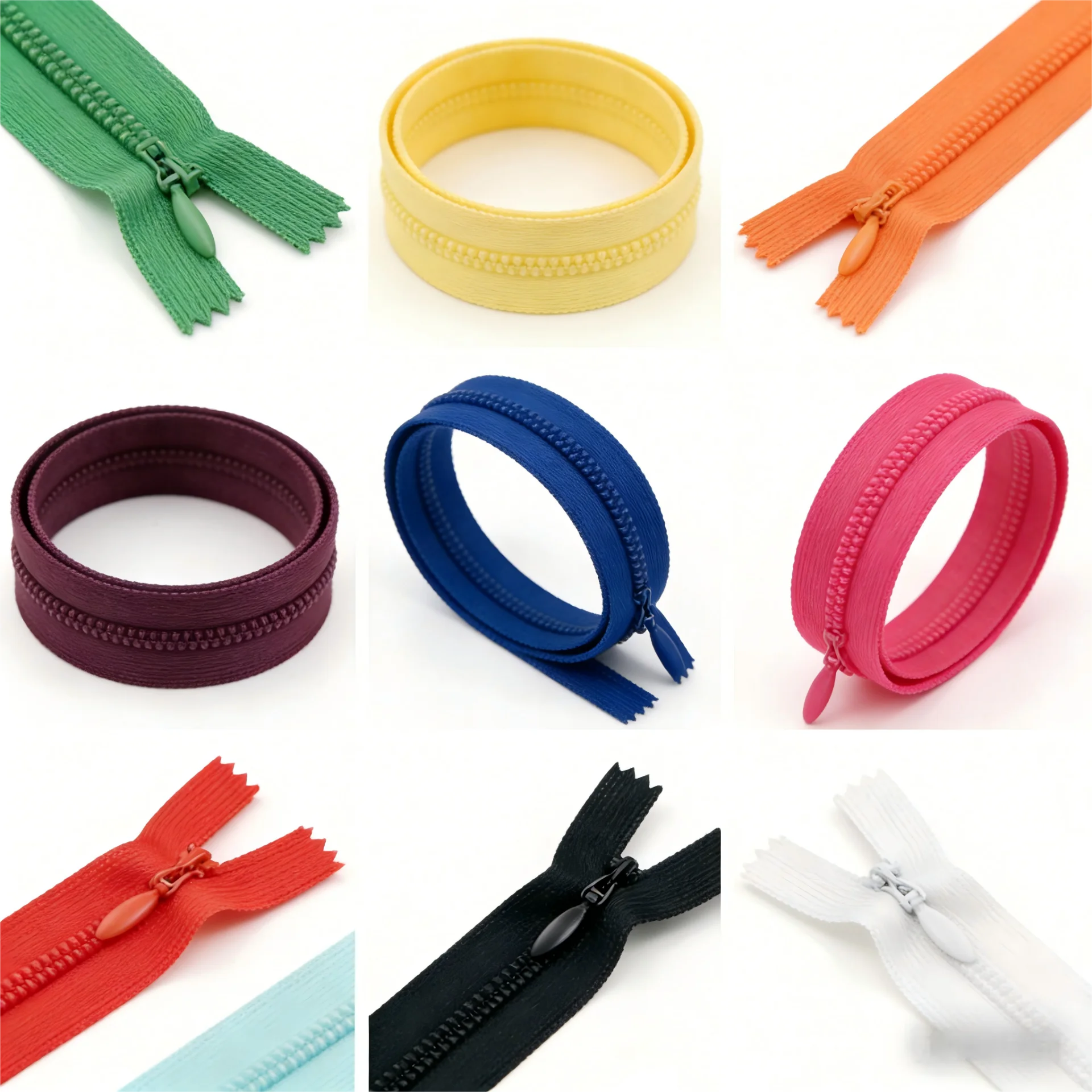
Buyer decision: budget custom colour lead time (15–20 business days) and tooling as separate lines in your calendar from standard-shade orders, and request colour fastness testing only for programmes where a mismatch would trigger a claim.
Performance
Quiet Operation, Snag Resistance and Laundering Durability
Performance is the part of the specification a wearer notices only when it fails — usually two weeks after the garment has been sold, on a returned item.
Smooth, quiet travel
The closure delivers quiet, smooth operation with minimised snagging risk, which extends garment lifespan and reduces returns.
Durability under laundering
Durability under frequent laundering and wear is assured through rigorous material selection and defined testing protocols.
High-grade materials
High-grade materials and advanced manufacturing processes are specified to ensure superior durability and smooth operation throughout the product lifecycle.
Buyer decision: if returns in your category are driven by stuck sliders rather than broken coils, put the slider and stopper specification at the top of your approval sheet and leave the coil grade as a secondary checkbox.
Size & length
How Length Is Measured, and Why Size Is Confirmed in the RFQ
Size and length are the two fields buyers most often assume. On a concealed closure both should be written down rather than inferred, because the tape has to fold into a seam allowance that already exists in your pattern.
- Length follows a rule, not a guess. Zipper length is based on the zipper teeth — so measure the finished opening on the teeth, not on the tape.
- Size is a specified field. A size section applies to this range; the numeric size that fits your order is fixed in the request rather than copied from a generic chart.
- Tape width interacts with both. Because tape width is confirmed per order, it is resolved against your seam allowance rather than assumed from a stock table.
Buyer decision: send the pattern’s seam allowance, or a cut sample of the finished seam, with the RFQ. It resolves most tape-width questions before sampling and keeps the first production run on schedule.
Stopper & slider
The Small Parts That Decide Whether the Closure Survives a Season
Stoppers and sliders occupy millimetres of the specification and account for most of the complaints. They are also the easiest parts to specify precisely, because both are documented product options.
- Precision-engineered stoppers ensure reliable zipper operation and longevity, and are available in various colours and finishes to match fabric requirements.
- Tested consistency: each stopper undergoes rigorous quality testing to guarantee consistent performance across a production run.
- Tailor-made pullers enhance structural integrity and system compatibility with the slider they are matched to.
- Snag-free operation with minimised snagging risk protects the surrounding fabric at the top and bottom of the opening.
Buyer decision: when the colourway is a fabric match rather than a contrast, specify the stopper finish on the same line as the tape colour — the stopper is the part most likely to arrive in the wrong tone.
End-type selector
Closed-End or Separating: Choosing the Right Construction
End type is a garment decision before it is a purchasing decision. It determines whether the zip is a closed seam or a fully separable opening, and it changes which style you order.
Closed-End
Perfect for dresses, skirts and garments that require a completely invisible closure. The closed-end design ensures a clean, seamless finish for fixed seams.
Open-End (Separating)
Ideal for jackets, cardigans and separating garments. It provides the invisible aesthetic while allowing complete separation of the zipper halves.
Buyer decision: write the end type on the technical drawing, not only on the purchase order — closed-end for fixed seams, open-end for full separation in jackets and outerwear. Both configurations use precision stoppers for professional use, and ZEELINK offers modular options between the closed and separating types so a programme spanning dresses and outerwear can be planned on one construction platform.
Scenario to specification
Match the Garment to the Construction, Then to the RFQ
Use the table as a working bridge between the design room and the purchase order. Each row pairs a garment scenario with the construction it implies and the fields that must appear in the request.
| Garment scenario | Construction to specify | What to put in the RFQ |
|---|---|---|
| Form-fitting dress with a centre-back seam | Closed-end construction with concealed tape, tape colour matched to the shell fabric. | Size, finished length measured on the teeth, tape colour. |
| Lined skirt with a side-seam opening | Closed-end construction with a low-profile stopper in a matching finish. | Stopper colour and finish, tape width checked against the seam allowance. |
| Zip-through jacket or outerwear shell | Open-end (separating) construction with a durable stopper and a branded puller. | Puller style and finish, branding method, target size. |
| Soft-knit cardigan or knitwear placket | Separating construction specified for quiet, smooth operation with minimised snagging. | Slider finish, tape colour matched to the knit, snag expectations for the wearer. |
| Luxury capsule or technical apparel programme | Pantone-matched tape and puller finish, with colour fastness testing requested. | Pantone reference, minimum order quantity, custom colour lead time of 15–20 business days. |
Buyer decision: if a single programme spans more than one of these scenarios, order the modular option between closed and separating types so your line does not carry two unrelated construction platforms.
Request a quote
Send a Complete Brief and Get a Price Estimate Back
A complete brief removes the slowest part of sourcing: the round of questions that arrives after the first quotation. Work through the checklist below before you make contact, then request a free consultation and price estimate for your programme.
- End type: closed-end, open-end or the modular option between them.
- Target size for each SKU in the range.
- Finished length, measured on the zipper teeth.
- Tape colour, or the Pantone reference you need matched.
- Stopper colour and finish, specified per colourway.
- Puller style, finish and whether logo branding is required.
- Order quantity, packaging expectations and delivery destination.
- Whether colour fastness testing must be documented.
Request a Free Consultation and Price Estimate
Get expert guidance on invisible zipper solutions tailored to your requirements. The ZEELINK team is ready to assist with product selection, customisation options and competitive pricing for bulk and OEM programmes.
Frequently Asked Questions
what is the difference between an invisible zipper and a concealed zipper?
they describe the same family of closure from two angles. an invisible zipper is the buying term for the finished effect — a closure that disappears into a seam. a concealed zipper is the engineering term for the mechanism: the concealed tape structure, coil orientation and stopper geometry that let the closure sit inside the seam allowance. zeelink lists the product as an invisible zipper and describes it as a durable concealed zipper for high-volume apparel production.
which end types are available, and which one should i choose?
zeelink documents closed-end and open-end (separating) styles, plus modular options between the two. closed-end suits dresses, skirts and fixed seams that need a completely invisible closure. open-end suits jackets, cardigans and outerwear where the zipper halves must separate completely. both configurations use precision stoppers.
can the zipper be pantone colour matched to my fabric?
yes. the product page lists a standard colour range, pantone colour matching and custom colour development. custom colour development applies minimum order quantities and runs on a lead time of 15–20 business days. colour fastness testing is available upon request.
how is the zipper length measured, and are numeric sizes published?
zipper length is based on the zipper teeth, so measure your finished opening on the teeth rather than on the tape. the product page carries a size section and a length section for the range; the numeric size and length that apply to your order are confirmed in the rfq rather than assumed from a generic chart.
can i order a custom puller with my logo on it?
yes. custom invisible zipper pullers are available in unique shapes and premium finishes with brand logo integration, produced through advanced die-casting and precision machining. prototype development and sampling are available before tooling, and custom tooling and mold design services support exclusive designs.
what should i include in my rfq?
include the end type (closed-end or open-end), target size, finished length measured on the zipper teeth, tape colour or pantone reference, stopper colour and finish, puller style and branding, order quantity and destination, and any colour fastness testing requirement. the zeelink technical team assists with product selection, customisation options and pricing through the contact page.